
Moving Image at the Dick Institute
Drives Look, my dress is blue like the ocean Pointers
Moving Image exhibited at the Dick Institute in June 2007. The opening gave those attending an opportunity to meet with two of the artists, Agnes Nedregard and Erik Olofsen, who had come from Holland to install their work.
|
Kirsten Lloyd (EmergeD) and Arabella Harvey (The Dick Institute) curated the show on the premise that it would show artist’s films and videos which exploited the medium’s capacity to distort reality and to trick or unsettle the viewer. |
 |
 |
After several meetings and long evenings viewing showreels, they eventually settled on works by three quite different artists, arriving at a show which addressed their original concerns, but which also threw up new questions and considerations in terms of scale and display.
Erik Olofsen’s work 'Drives', dominated the exhibition space, being both the largest and first work in the show. The work comprises three large scale projections, two of which are sited on massive free-standing, solid looking screens and one of which is directed onto the gallery wall.

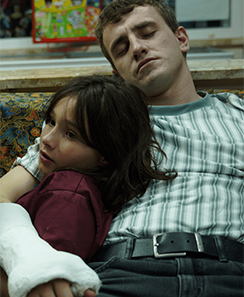
The dark, sunken images thrown onto the screens are colossal split-second images of drivers and passengers, providing mesmeric, captivating and seductive portraits which exist fleetingly, but in enormous detail due to the use of high speed film used by Olofsen while making the piece.
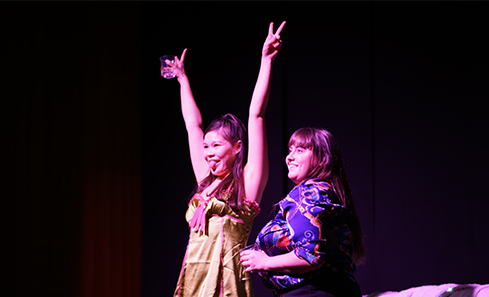
An acutely angled slice of the gallery was walled and covered to create a dark space for Agnes Nedregard’s 'Look, my dress is blue like the ocean'.
 |
 |
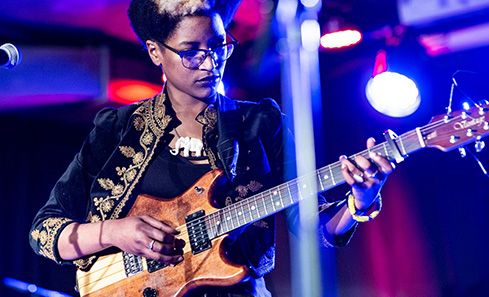
Inside the space a parabolic speaker hung over a bench, creating a sweet spot for people to sit beneath, playing the bizarre and dreamlike sounds of Harold Nono, with whom Agnes has collaborated. |
This projection was fascinating, disturbing – suggestive even…making a playful world full of childish reference and snatches of obscure memories.
|
'Pointers' by David Rothenberg operated quite differently, displayed discreetly on lcd screens at the rear of the gallery. Hunting dogs pause on eternal loops, physically frozen and staring purposefully at their prey. The landscape surrounding them moves and yet they do not. |
 |
 |
This piece was made from re-appropriated 1930’s footage and is quite different to the slick monoliths of Olofsen or the grainy, lo-tech aesthetic of Nedregard.
The show deliberately used works that played with the diversity of current stylistic trends in the field of the ‘moving image’, and which used scale and display as a way of manipulating the viewer’s experience of the works. Movement around the space was also directed, to an extent, by the works and the nature in which they were installed. All the works resisted the idea of a ‘narrative’, and aimed instead to create a space that fostered some consideration of the intrinsic qualities of film and video, in addition to the diversity of practice within that field on a worldwide basis. |